Most owners who ask us about AI start in the same place. They want to know which tool to buy. ChatGPT, some clever bit of software, an app someone mentioned at a trade show. We understand why. It feels like the fastest way to get moving. But it's the wrong place to start. Starting there is exactly why so many AI projects go nowhere, or make an existing mess move faster.
At Opsergo we work with owner-run businesses, usually 10 to 70 staff, where the owner still has a hand in everything and too much runs through them. Work is steady. Admin is eating the margin. AI feels like it should help, but nobody's sure where to start. Our answer is always the same: the tool comes last. Here's why, and here's the order that actually works.
Step one: find the savings first
Before anything else, we do an AI review. Half a day, and you get a one-page map of your biggest leaks. Not a strategy document. Not a slide deck. A plain page showing where time and money are slipping out of the business.
Then we work on shared savings. We find savings in your spend, and half of what we find is our fee, paid at sign-off or spread over 12 months. If we find nothing, you pay nothing. This means the project gets funded by money that was already leaking out of the business, not a fresh gamble on new technology.
That's the point of starting here. There's nothing to find up front. A clear look at what's already leaking, and a way to plug it that pays for itself.
Step two: get the process out of your head and onto paper
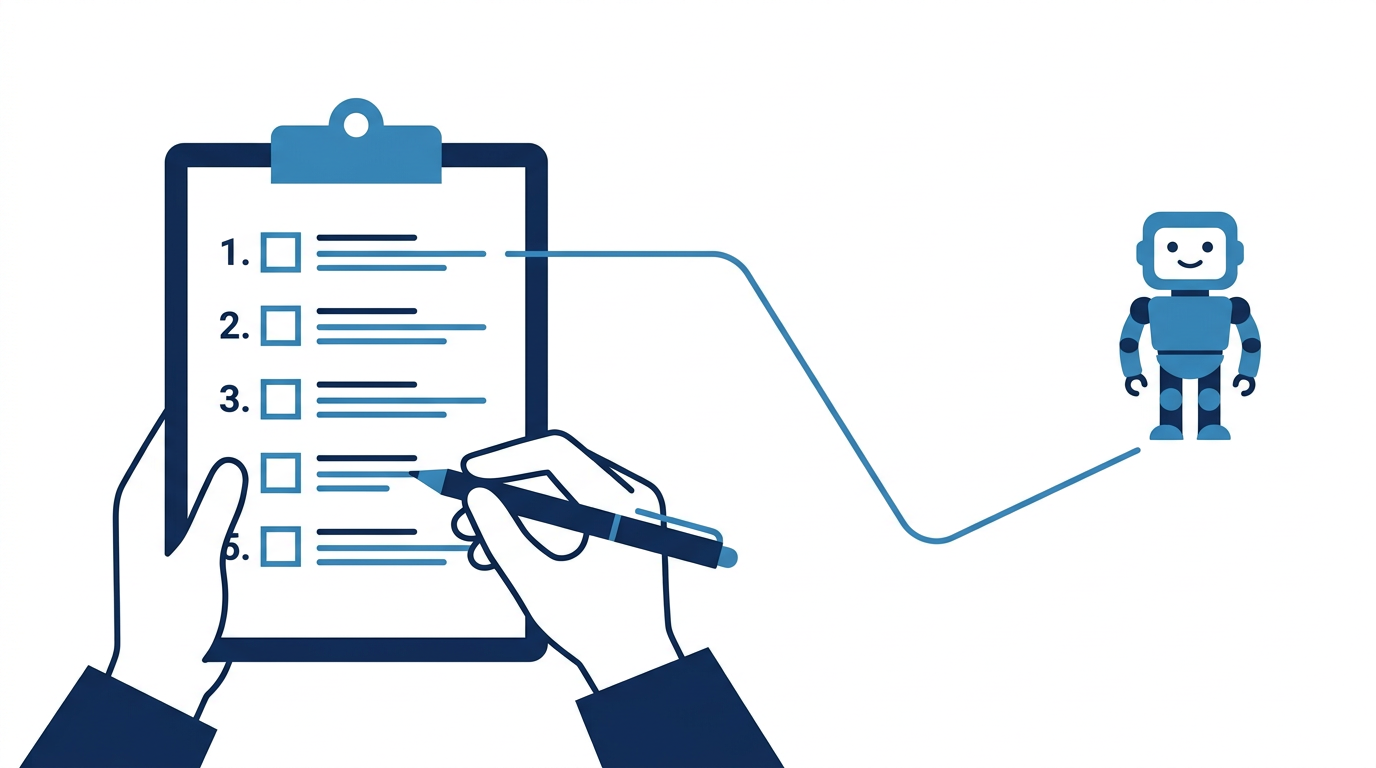
Once we know where the savings are, the next job isn't to build anything. It's to write things down. We work with you to get the rules and the process out of your head and onto paper, so the job doesn't depend on you remembering it, explaining it, or being in the room when it happens.
This step gets skipped constantly, because it isn't exciting. Nobody gets a demo out of a documented process. But it's the difference between AI that helps and AI that hurts.
An AI tool built on top of an undocumented, inconsistent process doesn't fix the chaos. It just automates it, faster.
If the way you check supplier invoices against orders changes depending on who's doing it, or job sheets come back from site missing photos nobody can read, handing that mess to a tool doesn't tidy it up. It makes the mess happen quicker, with more confidence behind it. Rules on paper first. Then the tool can follow them properly.
Step three: only then, build the tool
Once the process is written down and agreed, we build the AI tool. We build it with someone on your own team, not just for you, so it's understood inside the business rather than bolted on from outside. And a person approves everything it does. It never runs loose.
A real example
Take a common problem: invoices go out late because nobody knows the job's finished. It sits in someone's head. They're busy, they forget, the invoice waits, cash flow suffers.
Once the sign-off process is on paper, the fix is simple. When the job sheet is signed off on site, the invoice is drafted automatically and lands with the office to check and send. Nobody has to remember. The rule was written first. The tool just follows it.
The same thinking applies to other everyday leaks we see: the same customer details typed into three different systems, unpaid invoices chased by hand every Friday afternoon, paper timesheets added up at month end. None of these need a clever tool first. They need the rule written down first. The tool comes after.
How we keep this safe in practice
This is the part owners usually want to know about, and rightly so. The AI only follows rules you've written down and signed off. It doesn't guess or improvise. Nothing goes to a customer without someone checking it first. Your data stays in your own systems. It never goes into a public chatbot. And because it's built with someone on your team, you're never stuck relying on us to keep it running.
None of this is complicated. It's just careful. AI done properly should feel less risky than the way things are done now, not more.
Why the order matters more than the tool
It's tempting to think the value sits in the software. It doesn't. The value is in knowing where the money's going, having the process written down properly, and only then letting a tool take over the repeatable bits, with a person still checking the important ones.
Get the order wrong and you build a fast way to repeat the same mistakes. Get it right and you build something that pays for itself, runs without depending on one person, and stays under your control.
Start with the leak, not the tool
If work is steady but admin is quietly eating your margin, the first useful step isn't picking a tool. It's finding out where the money's actually going. That's what the AI review is for. Half a day. One page. No guesswork.
Talk to us and find out what's really costing you before you spend a penny on anything else.