
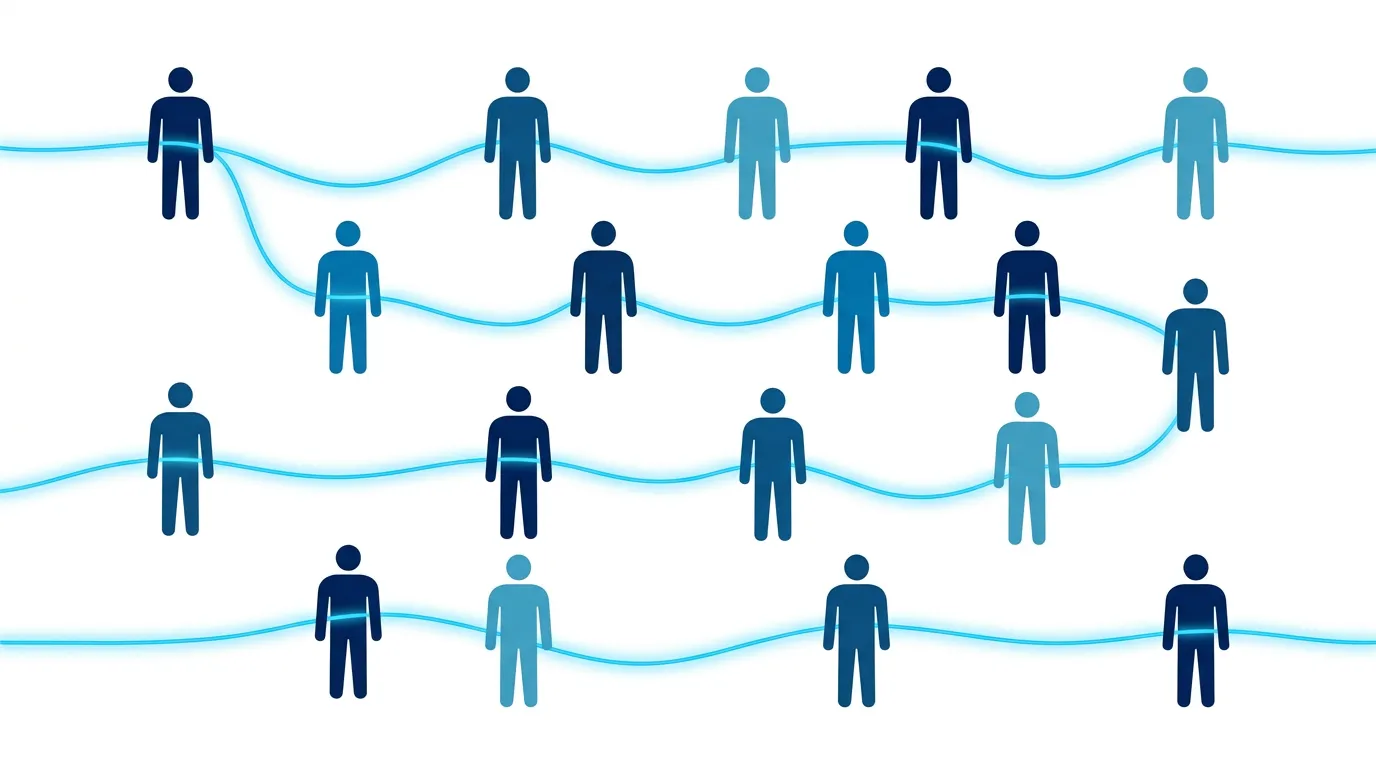
Ask most businesses who owns a specific process, the one for onboarding a new supplier, or closing the month, or handling a particular kind of customer complaint, and you'll usually get a name, not a document. That's not a people problem. It's what happens when nobody's looked at something for two years and one person's just quietly been doing it the whole time.
How it actually happens
Nobody sits down and decides to build a single point of failure. It happens gradually. Someone picks up a task because they're good at it, or because they happened to be free, and eighteen months later it's simply "how Sarah does it." The process works, so nobody questions it. That's exactly the problem: it works right up until Sarah's on holiday, or leaves, or gets pulled onto something else, and then it turns out nobody else actually knows the three judgement calls she was quietly making every time.
Why this stays invisible
A process that's working doesn't get looked at. That's the trap. The processes that get reviewed are the ones that are visibly broken. The ones quietly living in one person's head keep running fine, right up until the day they don't, and by then it's not a review, it's a crisis.
What to actually check
Not "do we have a process document," most businesses have those, gathering dust, half out of date. The real question is: if this person left tomorrow, could someone else actually do this, today, without three phone calls to figure out the bits that aren't written down. If the honest answer is no, that's worth knowing now, not the week after they've handed in their notice.
Why writing it down doesn't actually fix it
Here's the part most businesses get wrong once they spot the problem: they write the process down and consider it solved. It isn't. A document only works if people actually reach for it, and under real pressure, the person who's been doing a task for two years isn't going to stop and read four paragraphs about how they're supposed to do it. They're going to do what they already know, because that's faster, and it usually gets the job done.
There's a second trap sitting right behind the first one. The document you wrote six months ago is already a little out of date: a tool's been swapped, a step's been dropped, a template's moved. The next person who opens it hits that mismatch, works around it, and quietly stops trusting the document. Once that trust goes, you're back to exactly where you started: one person's memory standing in for a process anyone else could follow.
It's not really about documentation
Writing it down helps, but it's not really the point. The point is finding out where the business is quietly depending on one person's memory instead of a process anyone could follow. That's a different, much more useful conversation than "let's update the process docs."